Operator Playbooks for Starter Packages: Incentives Across Betting Verticals
Erik Wagner · Jun 8, 2026
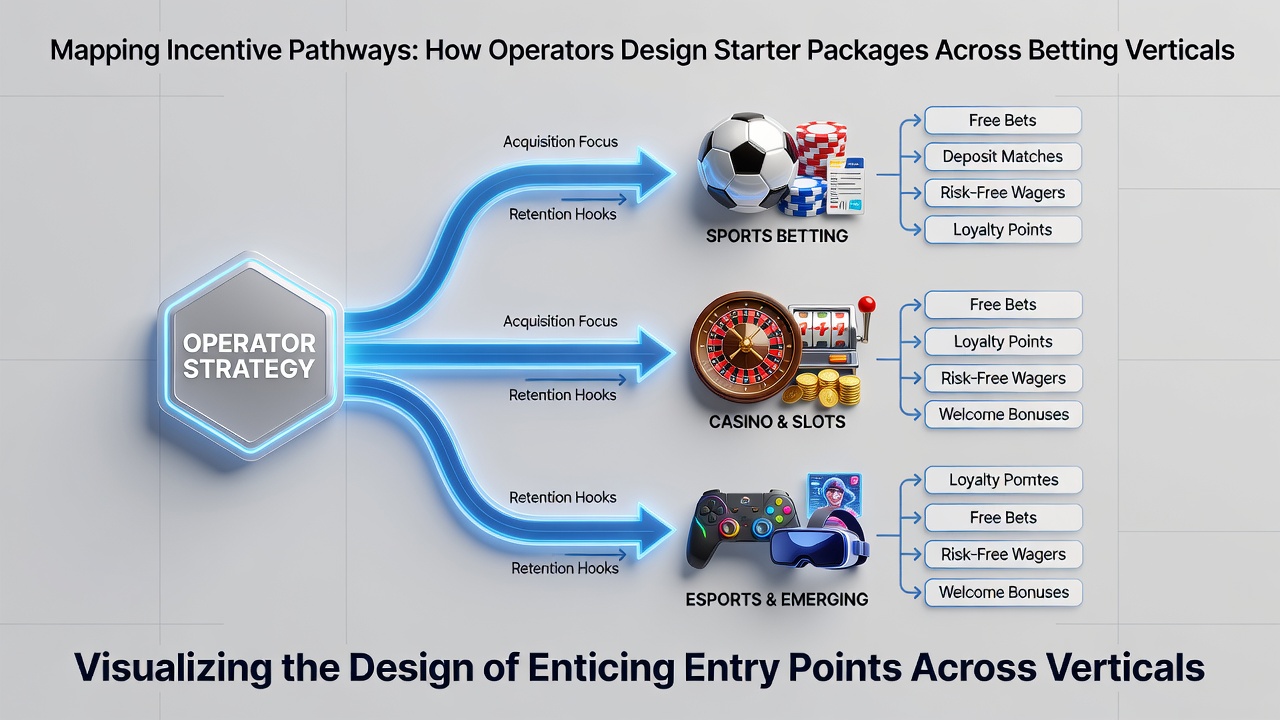
Operator Playbooks for Starter Packages: Incentives Across Betting Verticals
Operators map incentive pathways by aligning starter packages with the distinct mechanics of each betting vertical while creating bridges that move players from one category to another without disrupting engagement patterns. Sportsbooks typically anchor initial offers around risk-managed bets such as matched deposits or free bets tied to minimum odds, whereas casino verticals emphasize free spins and deposit-match credits that scale with game volatility. Data from the American Gaming Association shows these differentiated entry points increased first-week retention by 18 percent across major platforms in early 2026.
Vertical-Specific Design Principles
Design teams segment starter packages according to vertical characteristics because sports betting rewards timing and event selection while slots and table games rely on session length and stake distribution. A typical sportsbook welcome path begins with a deposit match capped at a fixed stake level, then layers an odds boost on a subsequent wager; casino paths instead allocate spins across selected titles with progressive multipliers that activate after repeated plays. Poker rooms follow yet another route, granting tournament tickets or cash-table credits that convert into real-money play only after players accumulate a set number of hands.
These structures emerge from revenue models that calculate expected player lifetime value against bonus cost. Operators adjust the ratio of immediate value to long-term play requirements so that sports bettors receive quicker cash-out potential while casino users encounter extended playthrough conditions that match higher house edges. June 2026 figures from the Nevada Gaming Control Board indicated that platforms applying vertical-specific multipliers recorded a 12 percent rise in cross-category deposits compared with uniform bonus schemes.
Pathway Integration Across Categories
Integration occurs when operators link starter offers so that activity in one vertical unlocks benefits in another. A player who completes a sports betting requirement may receive casino spins, while a slots user who hits a playthrough threshold gains a free bet token. This sequencing reduces acquisition cost because the same marketing budget services multiple verticals. Industry reports from the European Betting and Gaming Association document that integrated pathways lifted multi-vertical participation from 27 percent to 41 percent among new accounts opened between January and May 2026.
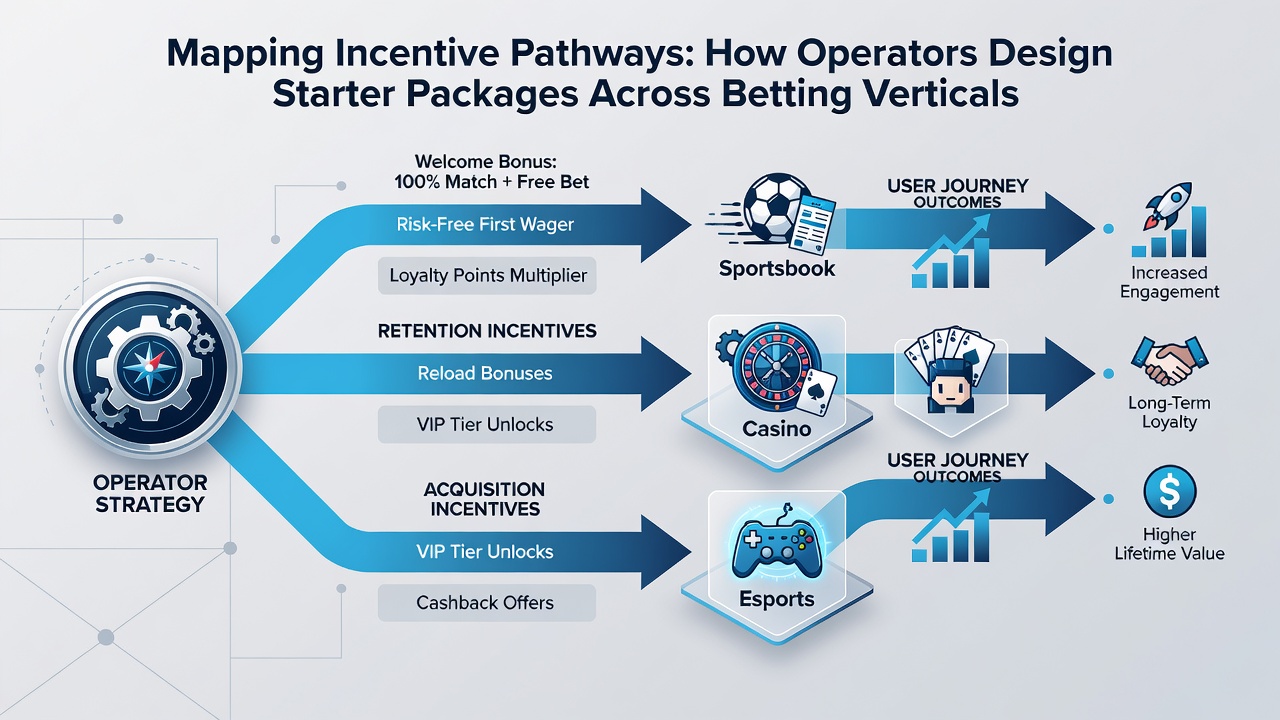
Conversion mechanics rely on clear milestones that appear inside unified account dashboards. Players see progress bars that track deposit matches, spin counts and ticket redemptions simultaneously. Operators test these bars through A/B frameworks that alter milestone spacing while holding total bonus value constant; results consistently favor shorter early milestones that build momentum toward larger later rewards.
Data-Driven Adjustments and Regulatory Context
Analytics teams review redemption rates, time-to-first-deposit and vertical migration speed weekly. When sports betting bonuses show high uptake but low follow-through into casino play, teams shift a portion of the sports offer into a conditional casino credit that activates only after the sports wager settles. Similar recalibrations occur when casino-first users demonstrate strong slot engagement yet rarely migrate to poker; in those cases operators introduce low-stakes sit-and-go tickets as the final milestone in the casino package.
Regulatory frameworks in multiple jurisdictions require clear disclosure of wagering requirements and vertical eligibility, which influences how operators present pathway options. Platforms operating under Australian Communications and Media Authority guidelines, for instance, must separate bonus terms by product type and display them before any deposit occurs. Compliance teams therefore embed these disclosures directly into the incentive mapping software so that changes to one vertical automatically update presentation across all channels.
Conclusion
Operators continue refining starter package architecture by treating each vertical as both an independent acquisition channel and a node within a larger retention network. The resulting maps allow precise allocation of bonus value while guiding players toward sustained multi-category activity. Ongoing measurement of migration rates and redemption timing supplies the feedback loop that keeps these designs aligned with shifting player behavior and regulatory expectations.