Mapping Access Layers: Bundled Incentives Driving Initial Engagement Across Converged Gaming Venues
Olivia Neumann · Jun 27, 2026

Mapping Access Layers: Bundled Incentives Driving Initial Engagement Across Converged Gaming Venues
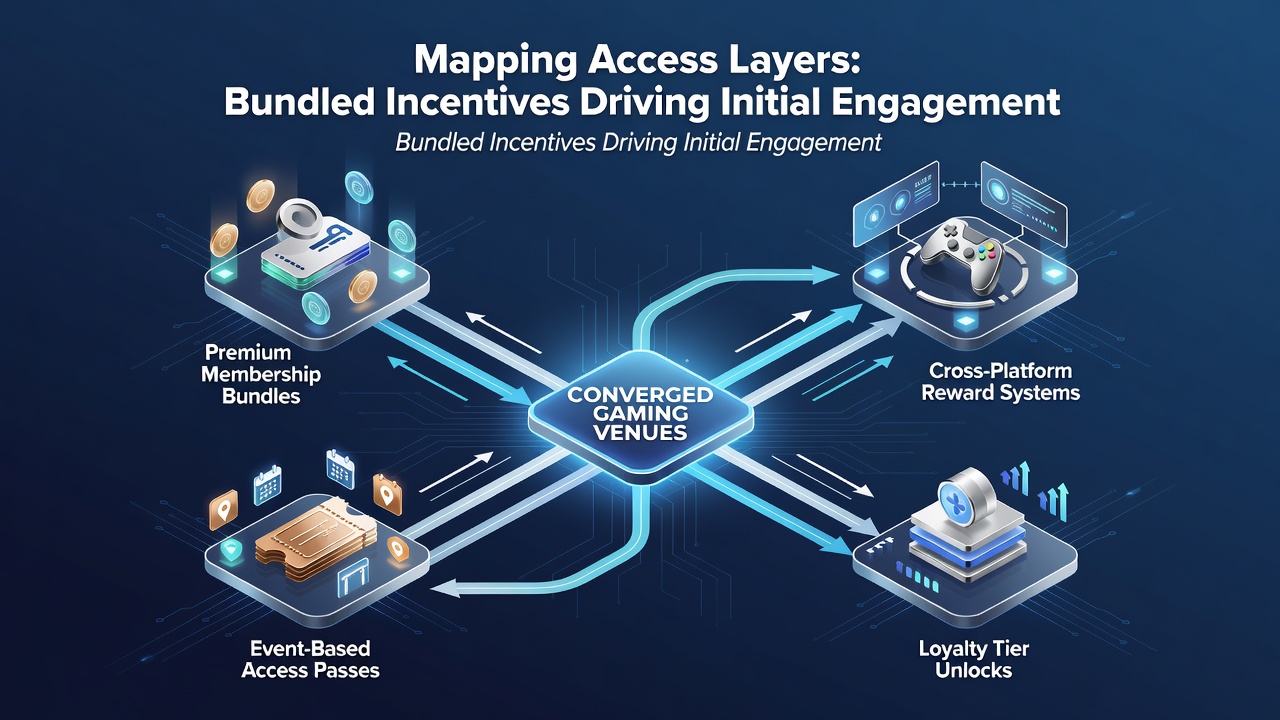
Converged gaming venues combine casino games with sports betting functions on single platforms, and operators structure access layers through tiered entry points that bundle incentives like no-deposit credits and matched deposits to guide users from initial sign-up toward sustained activity. These layers operate as sequential stages where each step unlocks additional features once players complete verification or make a first deposit, according to industry analyses from the European Gaming and Betting Association.
Defining Access Layers in Hybrid Platforms
Access layers function as mapped pathways that separate casual entry from deeper engagement, with the first layer typically offering free credits or spins to test slots while the second layer introduces odds boosts for betting markets once a user verifies an account. Operators design these sequences to reduce friction at the start, and data from the Nevada Gaming Control Board shows participation rates in converged environments rose when such layered incentives aligned across both verticals. Players move through these stages at their own pace, yet the structure encourages progression by tying rewards to specific actions like completing a profile or placing an initial wager on either casino or sportsbook sections.
Researchers tracking user behavior across North American markets have noted that bundled packages often combine elements such as risk-free spins with deposit matches, creating a single onboarding flow rather than separate promotions for each product type. This integration appears in platforms that operate under unified licenses, where regulatory frameworks in jurisdictions like those overseen by the Australian Communications and Media Authority permit cross-promotion between gaming formats.
Bundled Incentives and Early User Retention
Bundled incentives work by delivering multiple value propositions in one package, such as a set of free spins paired with a small sportsbook credit, which operators deploy to capture attention during the first session. In June 2026 several venue operators reported that users who claimed combined offers showed higher rates of completing account verification compared with those receiving single-product bonuses. The mechanism relies on clear sequencing where the initial free element leads directly into a deposit-triggered boost, and this pattern holds across multiple markets without requiring repeated logins or navigation between unrelated sections.
Studies from academic groups at the University of Nevada, Reno indicate that when incentives bundle across gaming types, the average time from registration to first deposit shortens because users encounter fewer decision points. Operators adjust bundle values based on regional data, for instance offering higher free spin quantities in casino-heavy regions while emphasizing odds enhancements in areas with stronger sports betting volumes. These adjustments maintain consistency within the access layer model rather than fragmenting the experience.
Implementation Across Global Venues
Venues in Canada and parts of the European Union have adopted similar layer structures, with operators using data dashboards to monitor how many users advance past the free-entry stage into funded play. Reports compiled by the Canadian Gaming Association highlight that platforms presenting incentives as unified bundles rather than separate offers achieve smoother transitions between casino and betting activities. Regulatory updates in these regions continue to shape how bundles can be advertised, yet the core mapping of access remains focused on sequential unlocking.
One documented case involved a multi-jurisdiction operator that introduced a starter package containing both slot credits and a betting voucher, resulting in measurable increases in cross-vertical activity within the first week. Industry observers tracking these metrics emphasize that success depends on transparent terms displayed at each layer, which helps maintain compliance while guiding users forward. Venues continue to refine these maps as new data emerges from player cohorts in 2026.
Conclusion
Mapping access layers through bundled incentives provides converged gaming venues with a structured method for converting initial visits into ongoing participation across combined casino and betting environments. Available data from regulatory bodies and industry associations in varied regions demonstrate consistent patterns where sequential rewards reduce early drop-off and support broader platform exploration. Operators maintain these systems by aligning promotions with local rules and user behavior metrics, ensuring the layers remain functional entry points rather than isolated offers.