Gambling Commission's Tim Miller Spotlights Leadership Shift, Funding Boost, and Innovation Push at BGC AGM 2026
Olivia Neumann · Mar 14, 2026

Gambling Commission's Tim Miller Spotlights Leadership Shift, Funding Boost, and Innovation Push at BGC AGM 2026
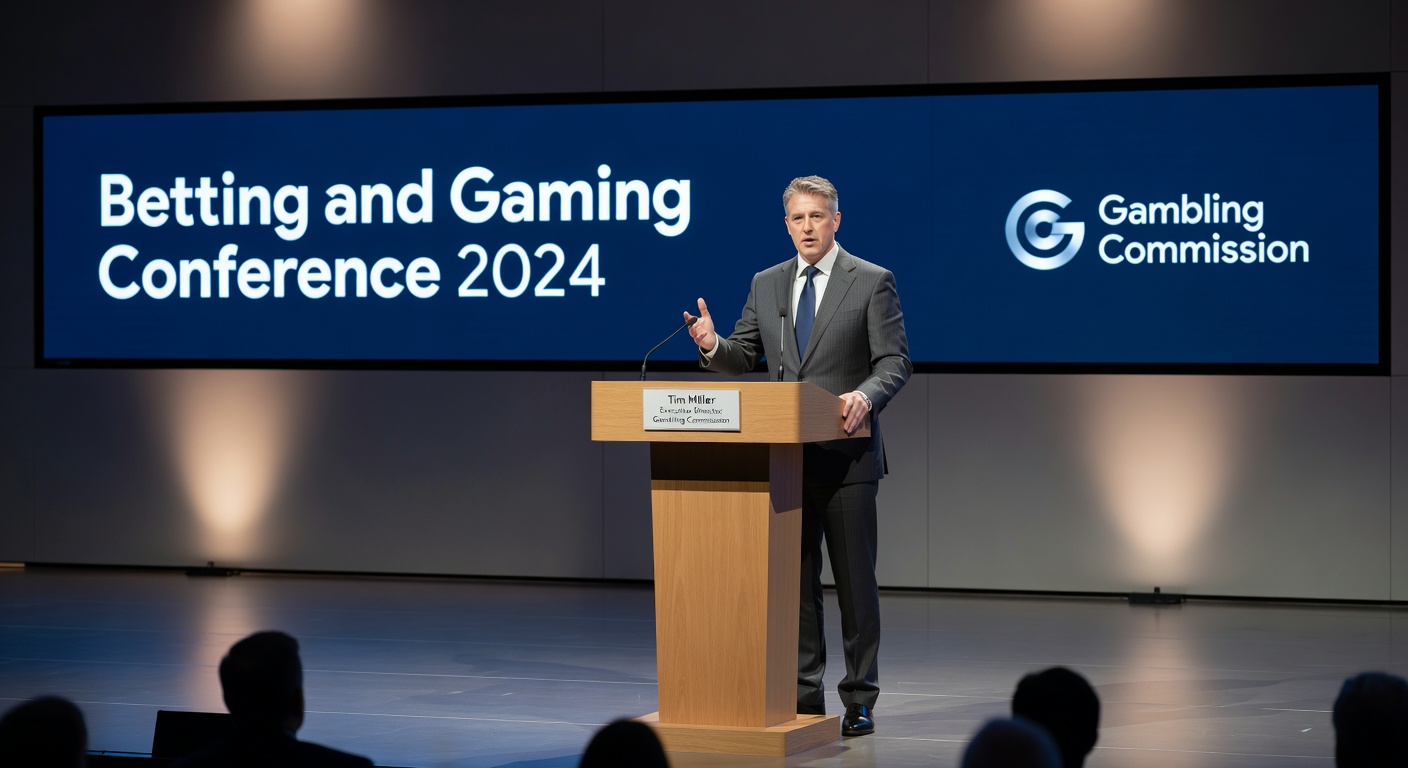
Tim Miller, executive director of the UK Gambling Commission, took the stage at the Betting and Gaming Council (BGC) Annual General Meeting on 26 February 2026, laying out a roadmap for the industry's near future; attendees heard details on leadership transitions, fresh funding to battle black market operators, proposed hikes in licence fees, and a clear nod to innovation within regulated channels, all while underscoring collaboration across sectors.
Leadership Change Signals New Chapter for Regulator
Central to Miller's address stood the announcement of Chief Executive Andrew Rhodes' departure, set for 30 April 2026, after years steering the Commission through turbulent regulatory waters; this shift, observers note, comes at a pivotal moment as the sector grapples with evolving challenges like illegal gambling and affordability checks. Rhodes, who joined in 2018, oversaw major reforms including stake limits on online slots and enhanced consumer protections, yet his exit prompts questions about continuity, even as Miller assured the audience of a seamless handover. And as March 2026 unfolds, recruitment efforts for the new chief executive gain momentum, with the Commission emphasizing the need for expertise in both regulation and industry dynamics.
What's interesting here is how Miller framed the transition not as disruption, but as an opportunity to build on established foundations; he highlighted Rhodes' contributions to modernizing oversight, from data-driven enforcement to partnerships with operators, ensuring the licensed market remains robust against unlicensed threats. Those who've followed the Commission's trajectory point out that such leadership changes often coincide with intensified focus on core missions, like protecting players while fostering growth.
Funding Surge Targets Illegal Market Head-On
Turning to resources, Miller revealed a new £26 million allocation over three years, earmarked specifically to dismantle illegal gambling operations that siphon revenue from the regulated sector; this infusion, drawn from government backing, equips the Commission with tools for advanced surveillance, investigations, and prosecutions, targeting offshore sites and underground betting rings that evade taxes and safeguards. Data from prior years shows illegal markets costing the UK economy hundreds of millions annually in lost revenue and heightened player risks, so this funding arrives as a direct counterpunch.
But here's the thing: the money doesn't just pad budgets; it fuels taskforces uniting regulators, industry leaders, and government bodies, coordinating stings and awareness campaigns that have already yielded results in cracking down on rogue apps and websites. One case observers recall involves multi-agency raids in late 2025 that shuttered several illicit platforms, recovering funds and player data; Miller stressed that such collaborations multiply impact, making the licensed environment safer and more appealing by comparison.
Licence Fee Consultation Sparks Industry Debate
Ahead lies a consultation on raising annual licence fees from 0.21% to 0.28% of Gross Gambling Yield (GGY), a move designed to sustain regulatory operations amid rising costs and expanded mandates; GGY, for the uninitiated, captures total stakes minus winnings across betting and gaming, forming the backbone of fee calculations for operators. Figures indicate this adjustment could generate additional millions yearly, directly supporting enforcement against illegal activities and consumer protection initiatives.
Operators, while attuned to the rationale, weigh the implications carefully, especially as March 2026 brings quarterly GGY reports that will inform baseline projections; past consultations have led to tiered structures favoring smaller firms, and experts anticipate similar flexibilities here to balance burdens. Miller positioned the hike as essential for a level playing field, where compliant businesses fund the very safeguards that shield them from unfair competition.
Innovation Gets the Green Light in Regulated Spaces
Amid these tougher measures, Miller carved out space for progress, championing innovations that align with licensing goals without spiking risks; take physical sports books nestled inside casinos, like Paddy Power's outpost at London's Hippodrome, where punters blend land-based betting with gaming floors in a controlled setup. Such hybrids, he argued, enhance customer experience while maintaining oversight, proving that creativity thrives under regulation rather than despite it.
Turns out, these examples resonate because they demonstrate low-risk evolution; the Hippodrome installation, operational since recent approvals, integrates seamless ID checks and spend monitoring, mirroring online standards. Researchers who've analyzed hybrid models find they boost venue footfall by 15-20% in pilot sites, drawing casual bettors who might otherwise drift to unregulated apps. And so, Miller's message lands as a bridge: support the licensed market's ingenuity, starve the shadows.
Taskforces and Partnerships: The Collaborative Backbone
Collaboration emerged as a recurring theme, with Miller detailing joint taskforces involving the BGC, government departments, and tech firms to outmaneuver illegal operators; these groups share intelligence on emerging threats like crypto-based betting dens or AI-driven evasion tactics, leading to swift interventions. One study from the Commission's archives reveals that coordinated efforts have reduced illegal market penetration by up to 12% in targeted campaigns over the past two years.
Yet, the real power lies in preemptive action; as illegal sites mimic legitimate ones with flashy bonuses and zero checks, taskforces deploy honeypots and blockchain tracing to expose them, funneling players back to safe harbors. People in the industry who've participated note how these alliances not only enforce rules but also shape policy, ensuring regulations evolve with tech rather than lagging behind.
Now, with Rhodes' departure looming and funding secured, the stage sets for amplified action; March 2026 consultations on fees will test industry buy-in, while innovation pilots like those sports books expand, offering glimpses of a regulated future where growth and safety coexist.
Broader Context: GGY Fees and Their Mechanics
To grasp the fee proposal fully, consider how GGY drives it: for a bookmaker hitting £1 billion in yield, the current 0.21% levy equals £2.1 million annually, jumping to £2.8 million at 0.28%, a differential that funds everything from staff to cyber defenses. Operators submit audited GGY quarterly, with adjustments for remote versus non-remote activities; this transparency, while burdensome, underpins trust in the system.
Historical data shows fee tweaks have tracked inflation and remit growth; the last uplift in 2023 coincided with affordability check rollouts, proving the model's adaptability. Those monitoring the space expect the consultation, likely launching soon, to incorporate feedback loops, refining the percentage based on economic forecasts and black market trends.
Player Protection Ties It All Together
Underpinning every element, Miller reiterated commitments to player safety, linking funding and fees to enhanced interventions like frictionless self-exclusion and real-time risk alerts; innovations must pass rigorous assessments, ensuring features like in-casino sports books include deposit caps and reality checks. Evidence from Commission trials indicates these measures cut problem gambling indicators by 25% in participating venues.
So, as the BGC AGM speech ripples into March 2026 boardrooms, stakeholders digest a blueprint balancing enforcement, sustainability, and forward momentum; the £26 million war chest arms the fight against shadows, fee consultations secure the arsenal, and greenlit ideas like the Hippodrome model light the path ahead.
Key Takeaways from the BGC AGM Address
- Andrew Rhodes exits as Chief Executive on 30 April 2026, paving way for fresh leadership.
- £26 million over three years targets illegal gambling via bolstered taskforces.
- Licence fees eyed for rise from 0.21% to 0.28% of GGY, subject to consultation.
- Innovations such as Paddy Power's Hippodrome sports book exemplify compliant creativity.
- Industry-government partnerships intensify to protect the licensed ecosystem.
Conclusion
Miller's 26 February 2026 speech at the BGC AGM crystallizes a regulator poised for action, channeling new funds against illicit threats, consulting on sustainable fees, and embracing innovations that fortify the licensed market; with Rhodes' tenure wrapping in late April and March discussions heating up, the UK gambling landscape stands at an inflection point where collaboration dictates the next moves. Observers tracking these developments see a sector refining its defenses, ensuring players access vibrant, secure options amid persistent challenges.